Infrared Thermography as a Non-Invasive Solution for Machinery Health Checks
Today, industries require machines that can operate under harsh conditions. The detection of hidden faults without stopping machine operations has become a concern for maintenance teams who seek smart diagnostic techniques. Infrared (IR) thermography is an answer to these concerns because it can show temperature changes that indicate faults developing in machines without any physical contact. The following are insights into why this technique has become an efficient non-invasive diagnostic tool for machine condition monitoring:
Visualizing Heat to Reveal Hidden Issues
Thermal imaging involves the use of patterns of heat that are emitted from surfaces. These patterns are then able to form clear images that show unusual heat patterns, such as those that are caused by friction, resistance, or insulation. Unlike other methods that involve taking parts apart, thermography allows for instant understanding, even when systems are in operation. By understanding the temperatures on the surfaces, a better understanding of what is going on inside the systems can be achieved. By using heat energy that would otherwise be invisible, thermography allows for faults to be detected at very early stages, even before sounds or vibrations are felt. This capability strengthens diagnostic confidence during routine assessments.
Preventing Downtime Through Early Detection
Unplanned shutdowns cause disruptions in production schedules and increase the costs of repair. Thermographic inspections help in detecting anomalies in the early stages, enabling repair before the problem worsens from minor to critical. This helps in maintenance planning that is in sync with production requirements and not with crisis situations. Organizations that invest in reliable infrared thermography inspection services that focus on proactive monitoring often experience smoother workflows and longer equipment life. Addressing thermal irregularities early reduces sudden stoppages while preserving productivity across entire facilities. Operational resilience improves as equipment reliability becomes more consistent.
Enhancing Safety Without Physical Intervention
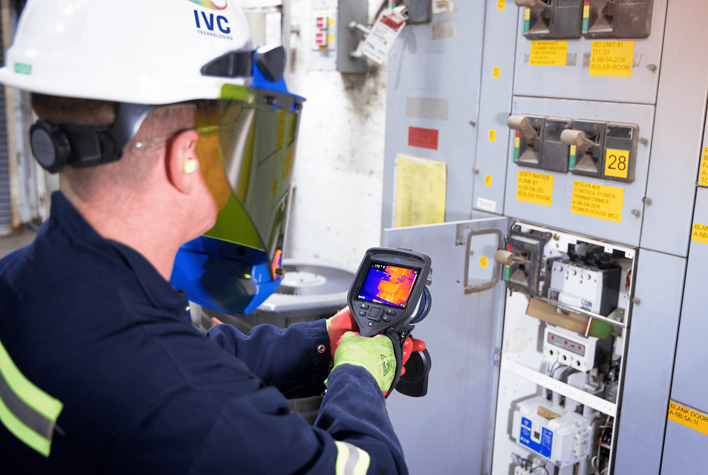
Inspecting machinery can sometimes put the technician in harm’s way, especially when dealing with high-voltage machinery or machinery in motion. IR thermography eliminates these potential dangers since the technician can perform the assessment from a safe distance. The technician will not come into contact with the machinery while still being able to get accurate readings, thus improving the standards of workplace safety. This technique is very useful when conducting tests on electrical panels, machinery in motion, or pressurized machinery. By keeping the technician away from harm, the regulations can be adhered to stringently. Safer inspection routines contribute to higher workforce confidence.
See also: Enterprise-Grade Document Management Solutions for Business Efficiency
Supporting Cost-Effective Maintenance Strategies
The efficiency of budgetary expenditure is always a concern for asset-based industries. Thermography is helpful in cost control by limiting unnecessary tests, excessive use of spare parts, and unplanned shutdowns. This approach to maintenance planning is more efficient because maintenance is carried out on the basis of severity rather than assumption. This ensures that maintenance is carried out where it is actually necessary, thus avoiding blanket maintenance policies. This reduces maintenance expenditure in the long run, making thermal imaging an efficient approach to maintenance planning. It is also helpful in forecasting because it provides information for long-term planning for asset management. Such clarity strengthens justification for maintenance investments.
Adapting Across Diverse Industrial Applications
The use of IR thermography can be easily adapted to different environments, including manufacturing plants and energy plants. This flexibility enables the technology to be used in mechanical systems, electrical systems, and envelopes. The different machinery used has different thermal signatures, yet the technology remains the same. This flexibility makes thermal imaging a unifying technology in integrated maintenance programs. As the industry continues to change, the technology continues to grow with new machinery and demands without any complex modifications. It also easily integrates with digital maintenance systems used for tracking assets. Cross-functional teams benefit from standardized inspection insights.
IR thermography has revolutionized machinery health checks by providing insight into machinery operations. It has helped in the detection of faults, the prevention of downtime, and enhancing safety and cost efficiency, among its advantages. It is highly versatile and has helped organizations make better-informed decisions regarding their machinery health. As organizations are looking for better and more efficient ways of protecting their machinery, thermal imaging has proven to be the solution for the future.