Engineering a Seamless Layout: How Pros Route Roof Runoff Away From Your Foundation
Most homeowners don’t spend a lot of time thinking about their roofline until a massive summer storm turns their flower beds into a muddy moat. It is easy to overlook, but managing water is arguably the most critical part of home maintenance. When things go wrong, you aren’t just dealing with wet grass; you are looking at cracked slabs and flooded crawlspaces. That is why smart property owners rely on local gutter installation professionals to design a system that actually works when the clouds open up. Getting that seamless layout right requires more than just a ladder and some aluminum; it takes a bit of hydraulic physics and an eye for elevation.
The Silent Threat of Improper Drainage
Water is the ultimate renovator, and not in a good way. If your runoff isn’t directed at least 5 to 10 feet away from your home, it is likely pooling right against the concrete. Over time, that constant moisture softens the soil, causing the house to settle unevenly. You might start noticing doors that won’t latch or mysterious cracks in the drywall.
Professionals look for these red flags immediately. They understand that a gutter system is not just a decorative trim; it is a structural shield. By calculating the total roof area, they can determine exactly how much water will run off during a heavy downpour and where that volume needs to go to keep the ground stable.
Calculating Pitch for Maximum Flow
One of the biggest mistakes DIYers make is hanging gutters perfectly level. While that might look nice to the naked eye, it is a recipe for standing water and mosquito breeding grounds. Pros use a specific “pitch” or slope to ensure gravity does the heavy lifting. Usually, this means a drop of about half an inch for every ten feet of piping. It is a delicate balance.
If the slope is too aggressive, the water moves so fast that it overshoots the corners. If it is too flat, debris can build up and cause clogs. Getting this geometry right ensures that even during a literal deluge, the channel stays clear and the water keeps moving toward the downspouts.
The Art of Downspout Placement
Downspouts are the exhaust pipes of your drainage system. You can have the highest quality materials in the world, but if the downspouts are spaced too far apart, the gutters will overflow. Experienced crews generally aim for one downspout for every 30 to 40 feet of gutter length. They also pay close attention to where that water exits.
Dumping all that liquid onto a steep driveway or right into a basement window well is a disaster waiting to happen. This is where gutter installation becomes more of a strategic puzzle, as installers have to navigate landscaping, walkways, and local codes to find the path of least resistance.
Read Also: How Real Estate Experts Simplify Home Buying and Selling
Strategic Extensions and Underground Diversion
Sometimes, a standard elbow at the bottom of a pipe isn’t enough. If your yard slopes back toward the house, the water will just find its way back to the foundation like a homing pigeon. In these cases, pros often recommend flip-up extensions or underground “pop-up” emitters.
These systems carry water through buried PVC pipes and discharge it into a safer area of the yard or into a French drain. This keeps your lawn looking clean without long, tripping hazards running across it. It is the professional touch that separates a basic “splash block” setup from a truly engineered drainage solution.
Choosing Quality Materials for Longevity
Not all gutters are created equal. While plastic kits from big-box stores might be tempting for the budget-conscious, they rarely survive a harsh winter or a fallen branch. Seamless aluminum or copper is the industry standard for a reason.
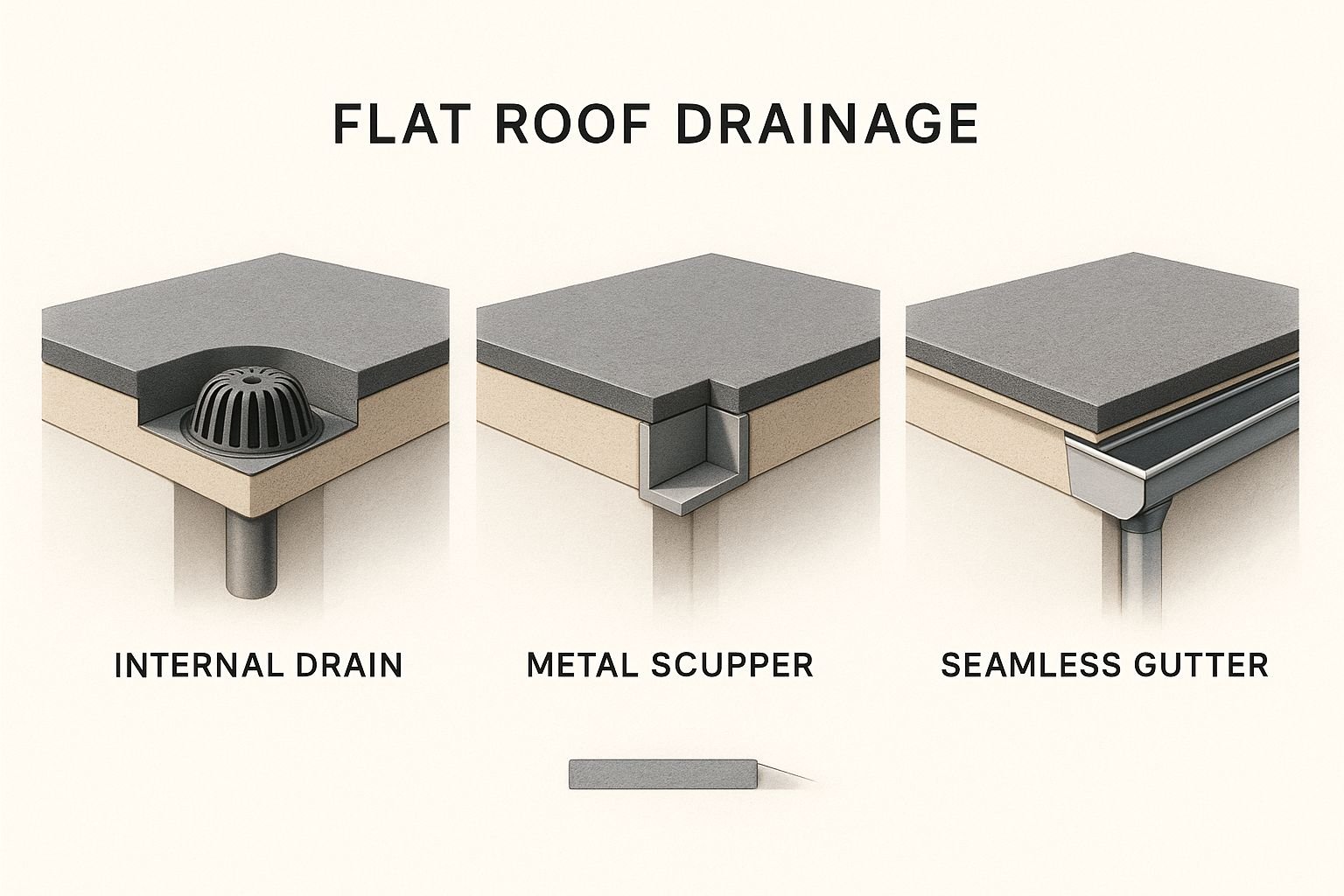
Because seamless gutters are custom-extruded on-site to the exact length of your roofline, there are no joints to leak or pull apart over time. This structural integrity is vital because water is heavy. A gutter full of wet leaves and rain can weigh hundreds of pounds, and if the hangers aren’t spaced correctly into the rafters, the whole thing can tear away from the fascia board.
Final Word: The Value of Professional Oversight
At the end of the day, protecting your most significant investment comes down to the details that most people never see. From choosing the right gauge of metal to ensuring the flashing is tucked perfectly under the shingles, a professional eye catches the small errors that lead to hefty repair bills down the road. It is about peace of mind. When the rain starts hammering on the roof in the middle of the night, you want to know that the system is working exactly as intended. If you are worried about the integrity of your perimeter, reaching out to local gutter installation professionals is the best way to ensure your home stays dry and your foundation remains rock solid for decades.